Labor Holistix: The Unmedicated Labor Guide
Labor without an epidural using physiology, not pain tolerance.
Price: $27
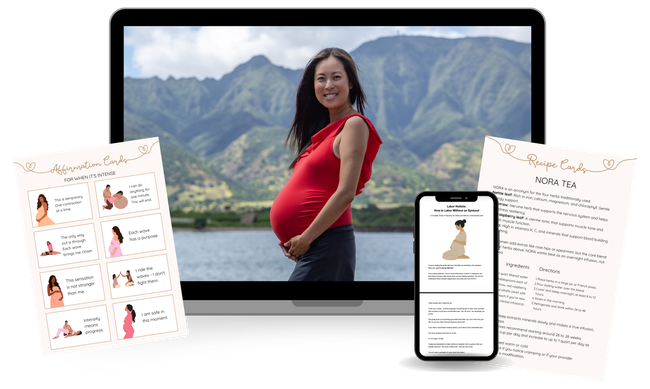
100+ pages of physiology, techniques, and practical tools - everything you need to labor with confidence.
What's included?
The complete labor physiology breakdown - what's actually happening during a contraction (your uterus is doing three things at once), why labor often starts at night, the sphincter law, the fear-tension-pain cycle, and why your cervix isn't a door. (When you understand what a sensation means, it stops being "pain" and starts being information)
The hormone blueprint - how oxytocin, beta-endorphins, and adrenaline work together (and what disrupts them). Why Pitocin contractions feel different from natural ones. What beta-endorphins actually do (hint: your body produces 20-40x normal levels during labor). (Understanding this is the difference between fighting your body and working with it.)
Stage-specific breathing patterns - not generic "just breathe" advice. Slow breathing for early and active labor, surge breathing for intensity peaks, breathing down for pushing. Each pattern explained with counts and rhythm. (These are the specific techniques that work when contractions are stacking and you can't think straight.)
The complete positions library - which positions open your pelvis, help baby descend, relieve back labor, and what to use when labor stalls. Organized by situation so your partner can pull it up mid-contraction and know exactly what to suggest. (You won't be Googling "best labor positions" at 7cm.)
Natural pain relief tools that actually work - hydrotherapy (shower, bath, how water changes the game), vocalization (why low sounds help and high sounds don't), counter-pressure and hip squeezes, rebozo techniques, and massage. (These have worked for thousands of years for a reason.)
Mental anchors for when labor gets overwhelming - focal points, visualization, counting, and affirmations so you don't spiral into panic during transition. (This is how you stay present instead of checking out.)
Pelvic floor preparation - how to release (not just kegel), why relaxation matters more than strength, and how to practice surrender before labor. (Your pelvic floor needs to open, not clamp down.)
Early labor at home guidance so you know exactly when to go (not too early, not too late) and don't accidentally start the intervention clock before active labor even begins.
If things don't go as planned - what to know if you need or want an epidural, if labor stalls, or if a cesarean becomes necessary. Plus how to process a birth that went differently than you imagined. (This isn't an anti-epidural guide. It's a pro-preparation guide.)
BONUS: printable affirmation cards - words to anchor you when your inner voice starts saying "I can't do this." Pull them out, read one, come back to yourself.
BONUS: simple recipes for NORA tea and labor-ade to fuel your stamina plus pad-sicles for postpartum healing (because you deserve to feel taken care of on the other side too).
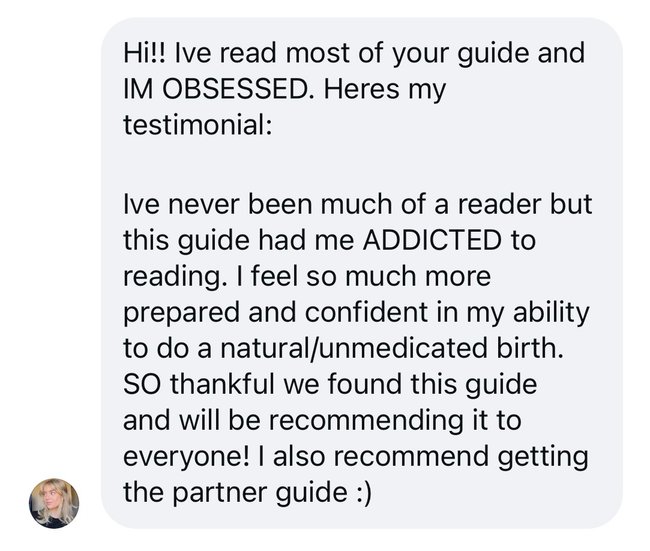
Straight from a mama's DMs:
FAQs:
Is this just another PDF I'll never read?
No - and that's the whole point. This guide is designed for two uses: (1) Read through it once to understand the physiology and techniques, then (2) Pull up the quick-reference sections during labor. The breathing patterns, positions, and partner prompts are formatted so you can use them in the moment, not just study them beforehand.
I'm already taking a birth class. Do I need this too?
Birth classes are great for the big picture, but most don't give you the specific, stage-by-stage techniques you can reference during labor. Think of this as your practical companion - the "what do I actually DO right now" guide that picks up where classes leave off.
What if I'm already 38+ weeks?
You can read through this over a weekend and have it ready to reference during labor. Many mamas buy this in their final weeks specifically because it's fast to digest and immediately usable.
Is this worth $27?
Epidurals often cost $500-2,500+ out of pocket. The intervention cascade that frequently follows - Pitocin, continuous monitoring, assisted delivery, longer hospital stays - adds even more. This guide gives you tools that could help you avoid all of that. For less than the cost of a nice dinner out.
What if I end up getting an epidural anyway?
Then you'll have made that decision from a place of knowledge, not fear or pressure. Many of the techniques in this guide are also useful in early labor before an epidural, and the physiology section helps you understand what's happening in your body regardless of how you manage pain. This isn't an anti-epidural guide - it's a pro-preparation guide.
Can my partner use this too?
Yes. The positions library and breathing patterns are designed so your partner can pull them up and guide you through them. That said, if you want a complete guide specifically for your partner, the Partner's Labor Playbook covers their role in detail - it's available as an add-on at checkout.
Please note: This guide is for educational purposes only and is not medical advice. Every birth is different - always discuss decisions with your care provider. Results and experiences vary. Due to the digital nature of this product, all sales are final.
Customer support: sisi@mamaholistix.com